Forkit Redefined
Forkit Redefined
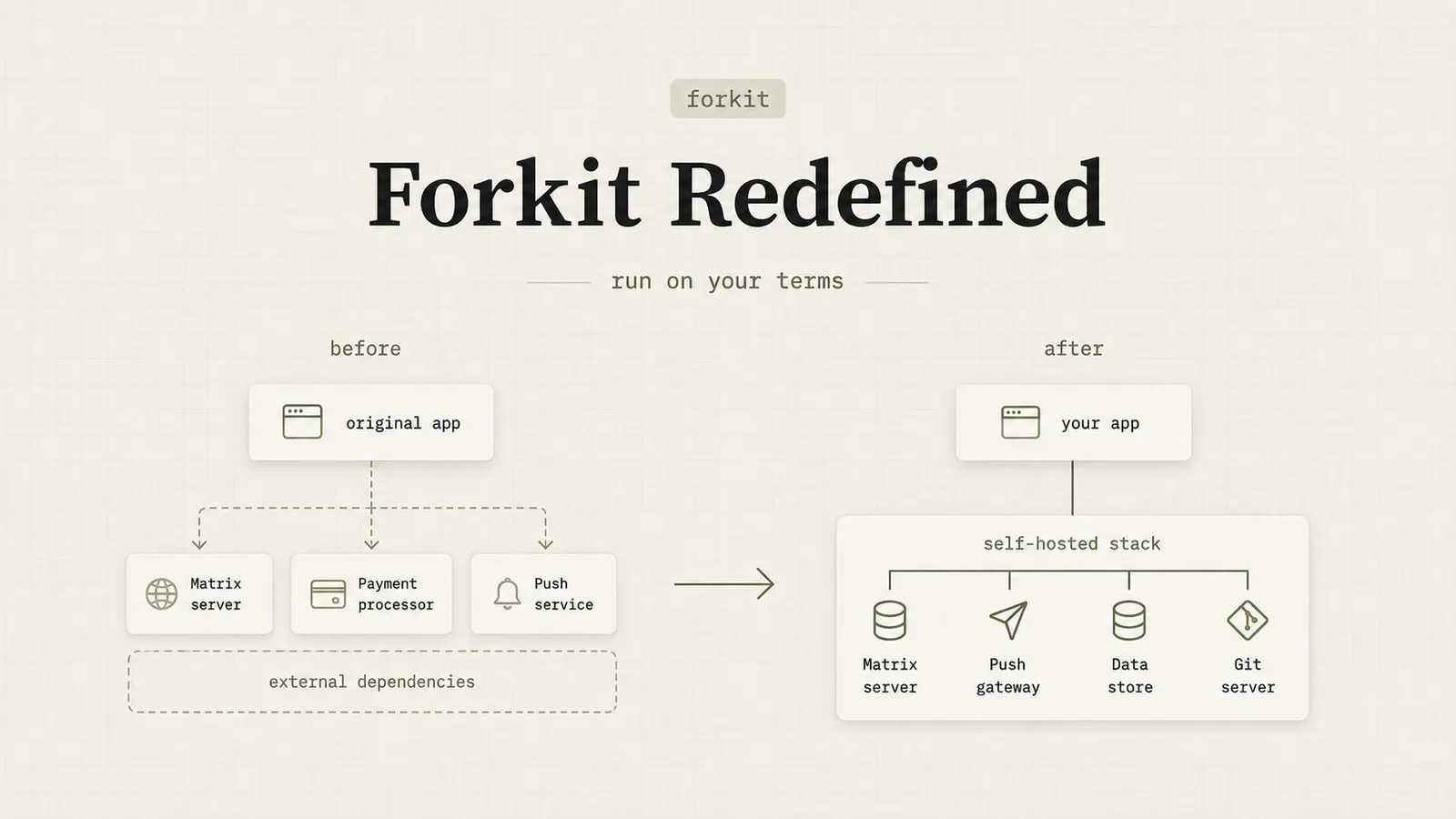
forkit started out answering one thing: can this repo run independently as-is, or do you need to fork it to make it work?
The problem with that question is that by the time it's asked, I've likely already found something I want to change. I only audit the dependencies of projects I already intend to put on my stack. The go/no-go was never the part I needed.
What I needed to ask was: what would have to change for this to run in my lab, on my terms?
What that means
When I self-host something, I want two things: my data stays on my devices, and nothing stops working because someone else's service went down.
Clear enough as requirements. Harder to apply than they look. A Matrix server talks to other Matrix servers constantly because that's the software working. A payment processor integration talks to its endpoint because there is nothing else it can talk to. Both are outbound connections. One is a functional requirement but the other is a blocker I need to remove or fence off.
So the question isn't "does this phone home?" It's "who's on the other end, and what breaks if I cut the line?"
Where it's headed
forkit now maps every dependency to the destinations it actually reaches, then lists what you'd have to change to clear a given profile. A profile is a bar for independent operation: runs offline, needs no vendor accounts, meets a published standard.
The profiles I write will lean toward independent operation and data sovereignty. But standards shift and preferences differ, so I plan to allow the application to scan against custom profiles while providing my own as a starting point.